PROJECT MEMBER
DATA
- ビルディングタイプ
- パビリオン・イベントブース
- 構造
- その他構造
- 工事種別
- 新築
- 延べ床面積
- 100㎡
- 竣工
- 2025-05
CREDIT
- 撮影
- Bai Yu
- 設計
- Philip Fung
- 担当者
- Voraphope Prasertsap
- 施工
- HKAC
- 構造設計
- HKAC
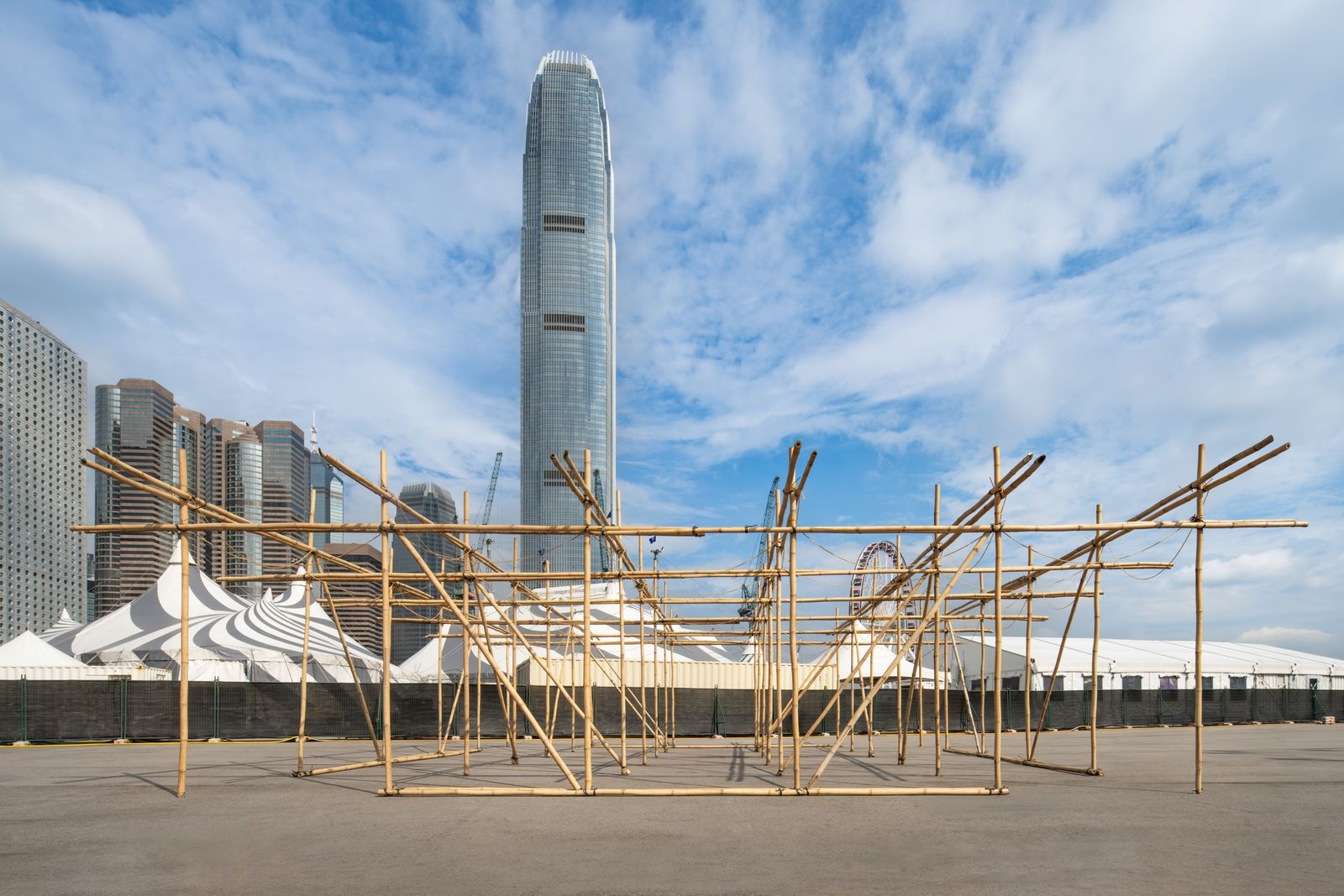
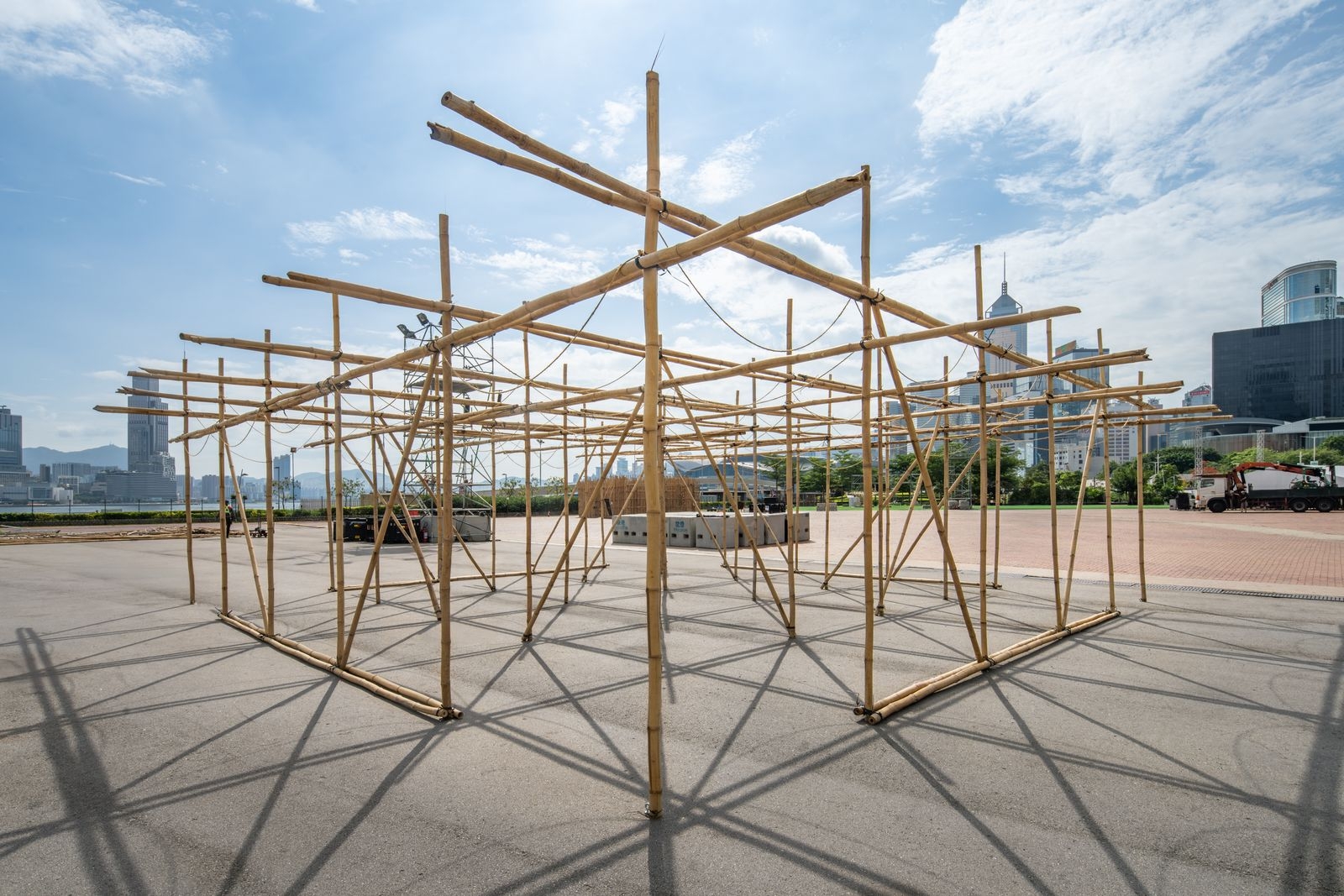
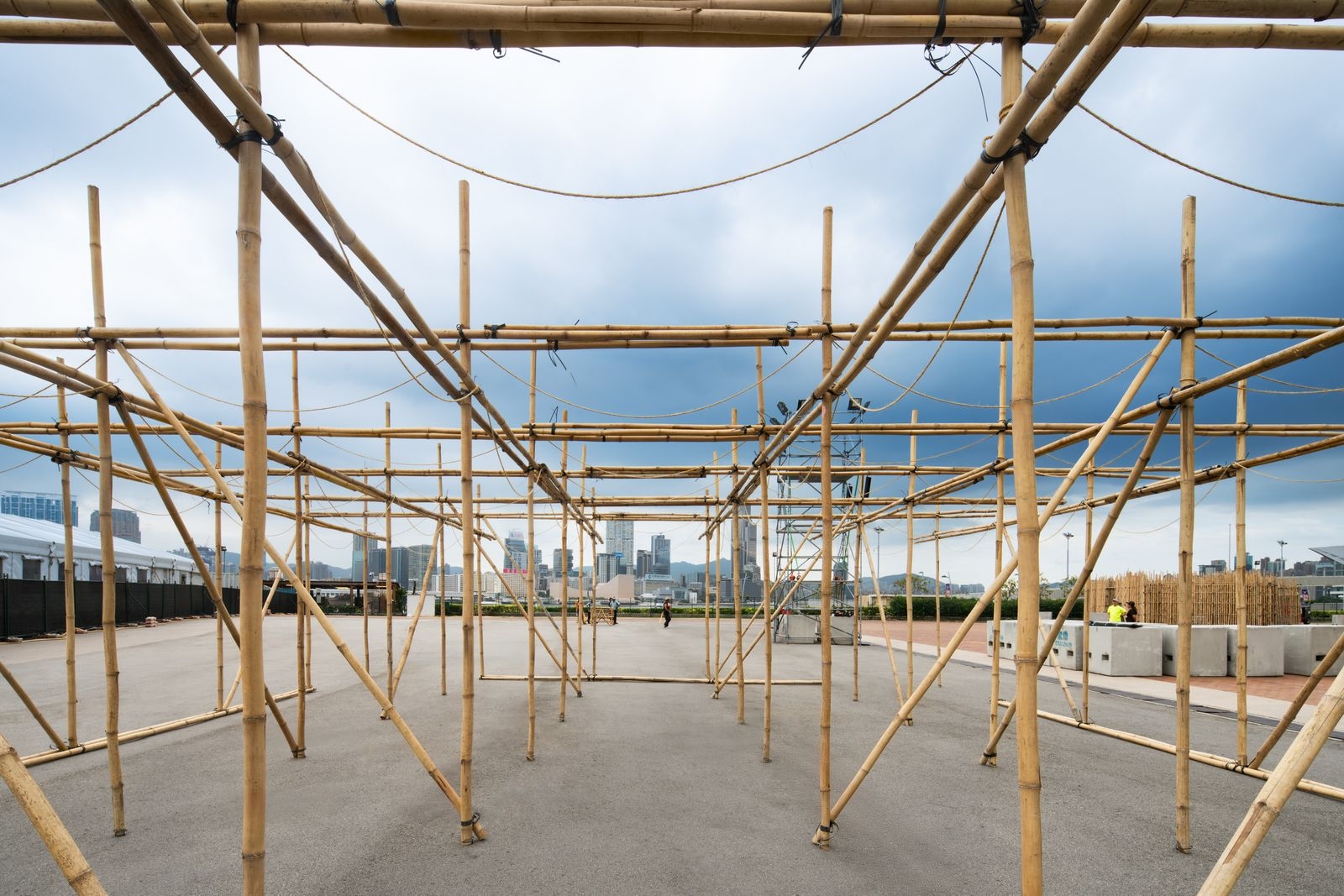
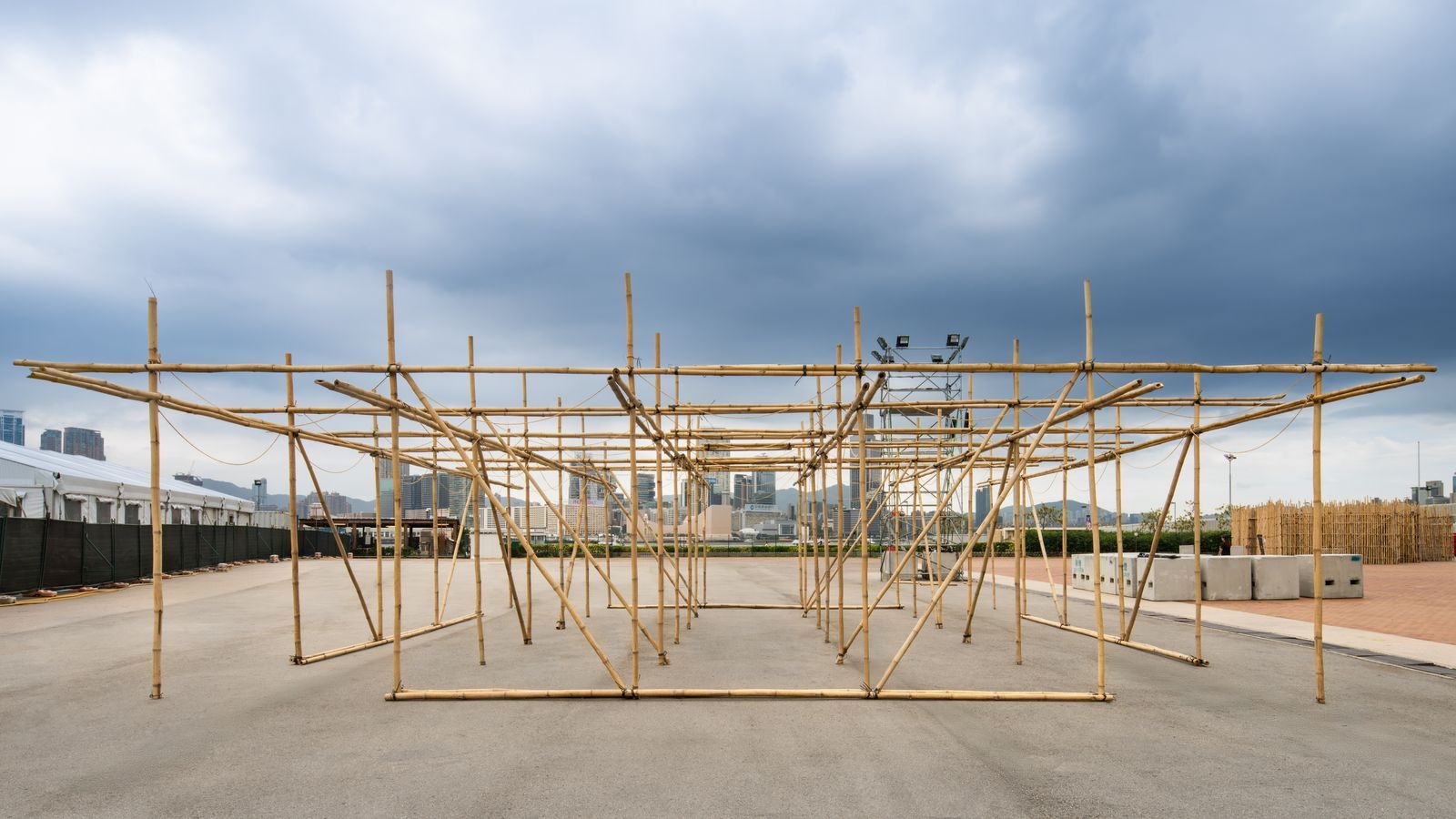
Are cities and nature in opposition or coexistence? During the process of urbanization, there are few opportunities to use natural materials in architecture. This is why Hong Kong is called Concrete Forest—a forest without trees, only cold and inhuman concrete buildings. However, if we pay close attention, we will notice traces of bamboo appearing throughout Hong Kong’s cityscape, often in the form of temporary scaffolding used in construction sites or festival bamboo theatres. The history of bamboo sheds in Hong Kong can be traced back to the 19th century, when local residents used bamboo to build temporary or permanent structures to cope with poverty or temporary housing needs. Most of these bamboo sheds were used in rural areas, fishing villages, or industrial zones, characterized by their economic practicality and ease of dismantling and rebuilding. Over time, the use of bamboo sheds expanded, holding cultural significance and reflecting social changes. Particularly in traditional markets and fishing villages, bamboo sheds remain affordable commercial and living spaces. Their importance lies in: 1) Low cost: affordable and easy to construct and dismantle, meeting the needs of temporary or low-income groups. 2) Cultural heritage: representing Hong Kong’s unique urban / rural history and embodying local craftsmanship. Unfortunately, with safety concerns and limited inheritors, the use and development of bamboo have been overlooked, and sustainability in bamboo architecture has not been widely exploded. However, in some corners of Hong Kong, we can still find traces of bamboo — especially in the temporary scaffolding on building exteriors, which adds a touch of vitality to the cold urban landscape. This summer, our studio is invited by the Hong Kong Architectural Centre to create a public artwork with bamboo at the Central Harbourfront public space. Located at the Victoria Harbour of Central, our project is called Waving Bamboo Pavilion which merges the intangible waves of the sea with the soft bamboo to create an architectural space. The concept of pavilion is to transform the scaffolding of Hong Kong from vertical to horizontal spaces, making uniform grid of columns that creates semi-artificial, semi-natural bamboo forest. where visitors may freely explore. The structure uses the simplest technique: cross-fixing horizontal and vertical bamboos to reflect Hong Kong’s craftsmanship and minimalistic design language. The space in between columns is woven with curve hemp ropes, creating roof that vibrates with the wind, allowing visitors to experience the comfort of sea breezes.
3